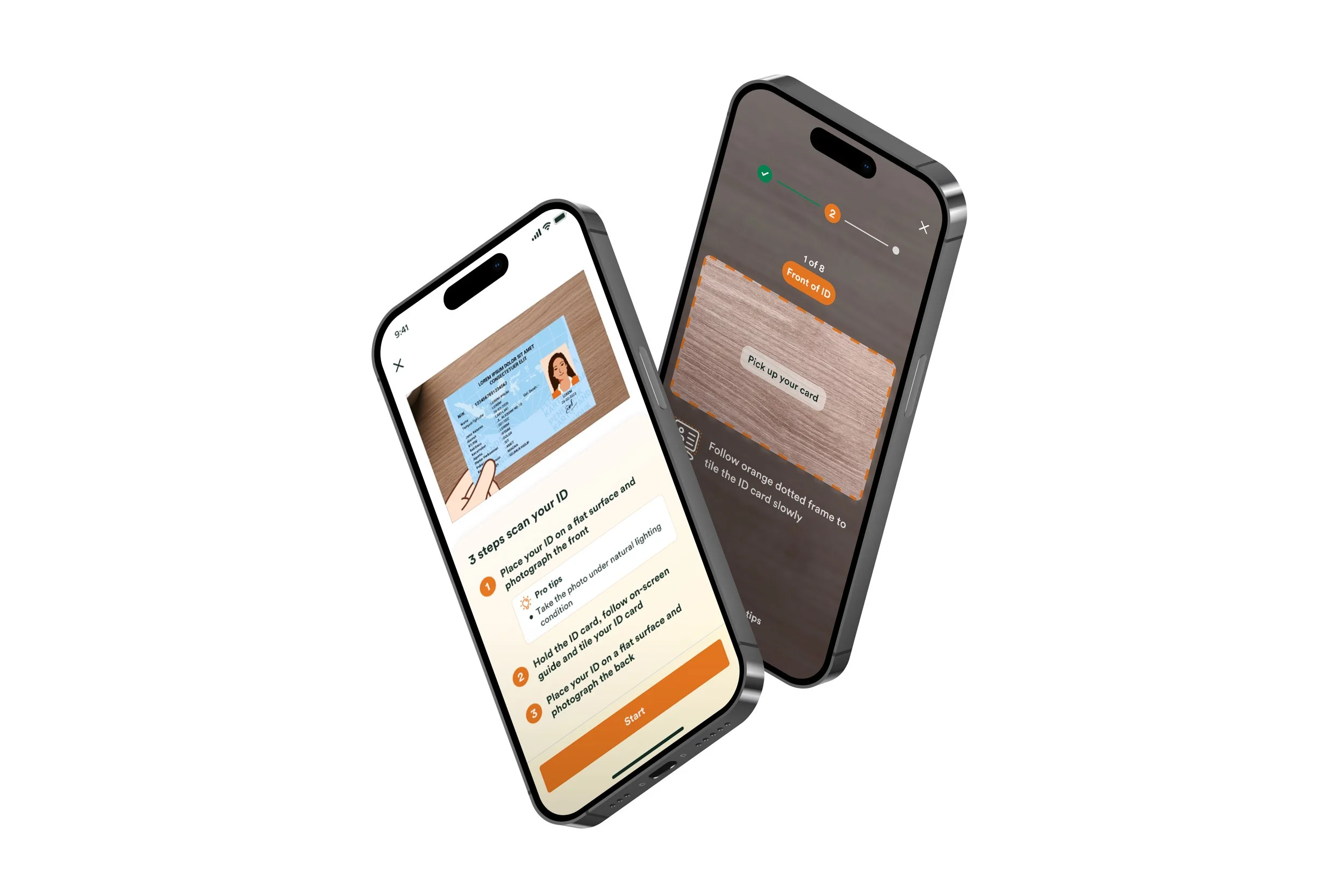
FWD Cube is a unified digital platform (tablet and app) that simplifies the agent journey by combining recruitment, training, sales, and customer management in one place
Role
UI/UX manager
Year
Aug 2024 - Present
Team
1BA / 2 Engineers / 2 Designers
Project management
Agile
The problem
In Indonesia, purchasing insurance policies currently requires customers to submit ID photos (front and back) for verification. This limited step has resulted in frequent fraud cases, undermining trust and security. To overcome these challenges, the eKYC journey must be redesigned to strengthen identity verification and reduce fraud while maintaining a seamless customer experience.
High‑fidelity prototypes
Roles and responsibilities
I conducted market research and analyzed results to identify key opportunities in the eKYC process. Working closely with the development team, I translated insights into feasible solutions and created high-fidelity prototypes to validate and refine our ideas.
Design Process
We started by conducting market research to understand how identity verification is handled across different apps and industries. This gave us insight into best practices such as facial recognition, live expression checks, and multi‑factor authentication, and highlighted gaps in the Indonesian eKYC process.
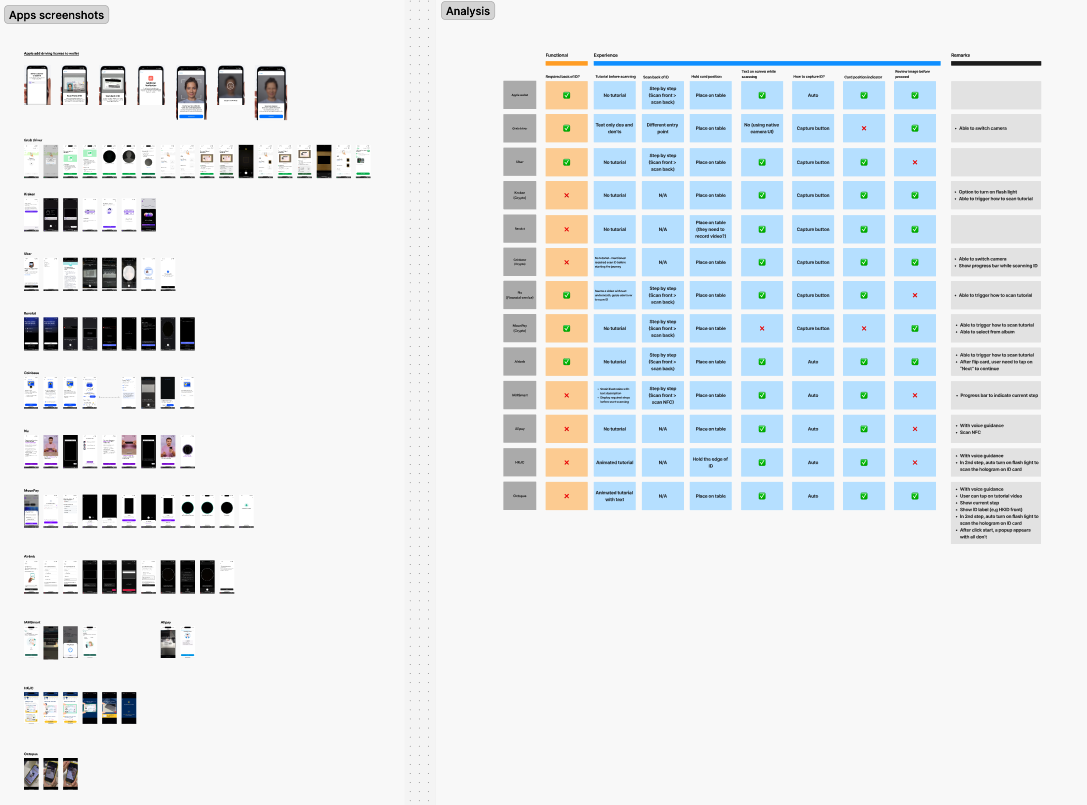
Market research and comparison
From our market research, we discovered that Indonesia’s eKYC process relied only on ID photo submission, which made it possible for agents to impersonate customers. By comparing with other apps, we found that stronger identity checks — such as live selfies — was a common best practice.
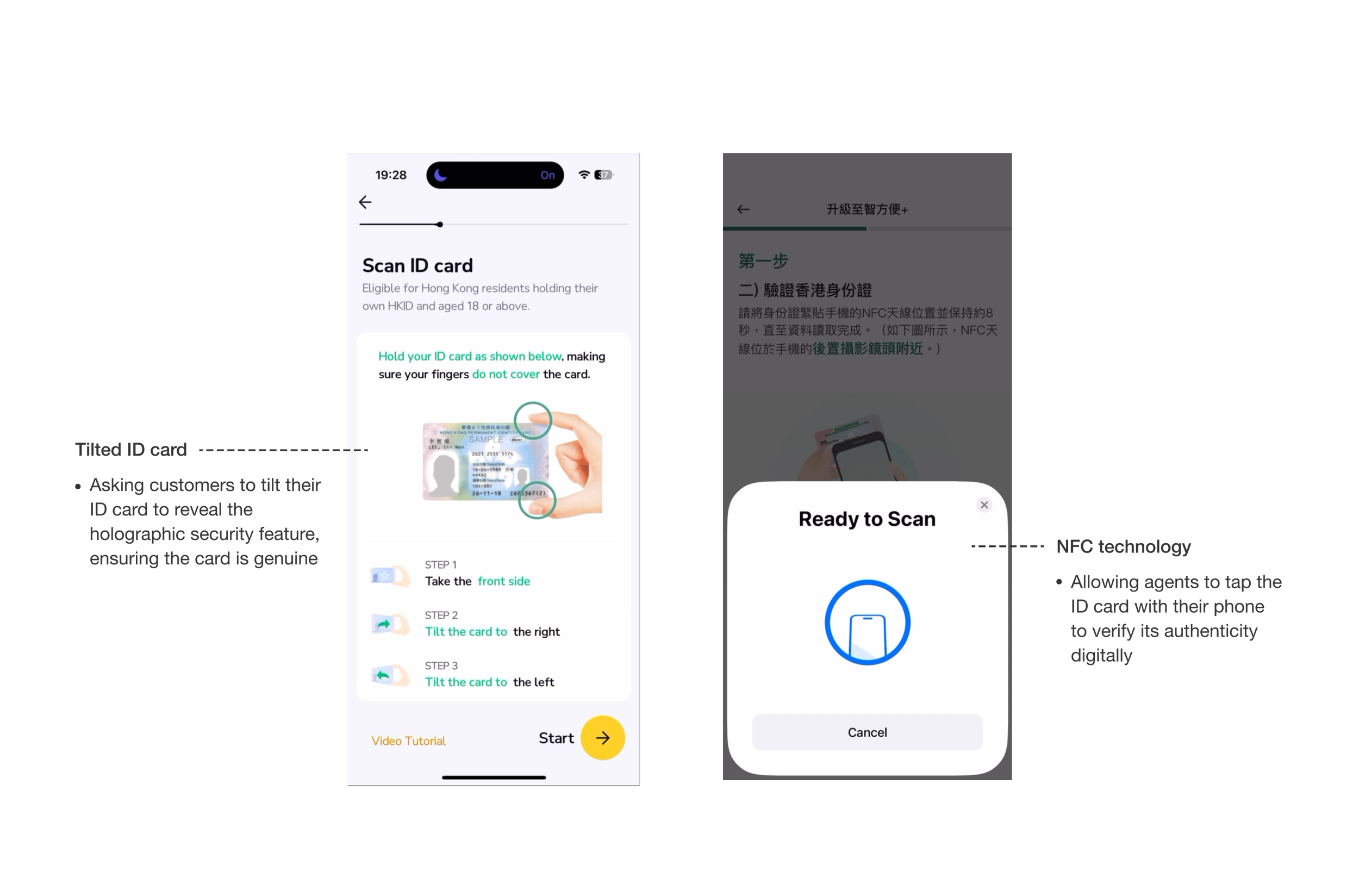
In addition, our research shows opportunities to strengthen ID verification through:
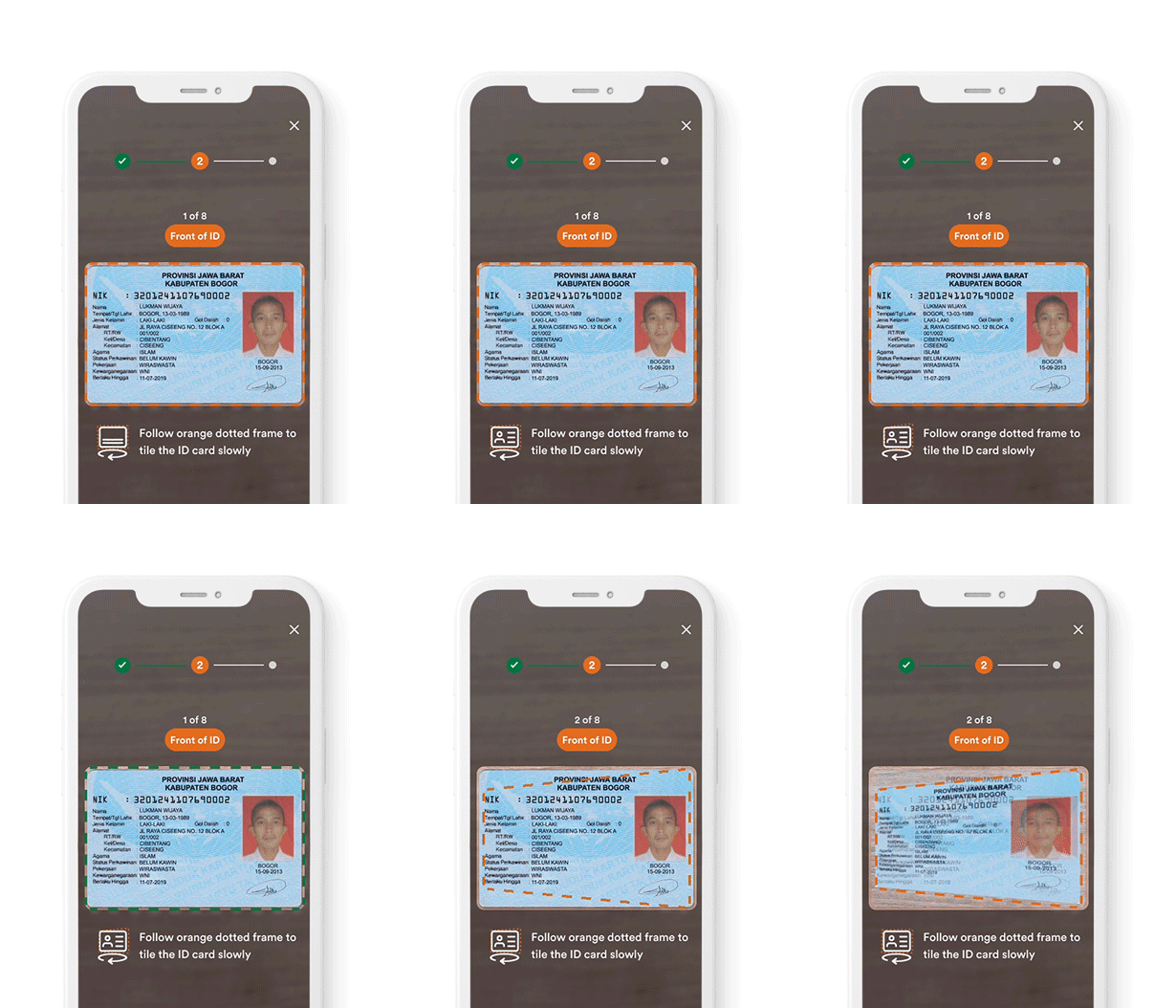
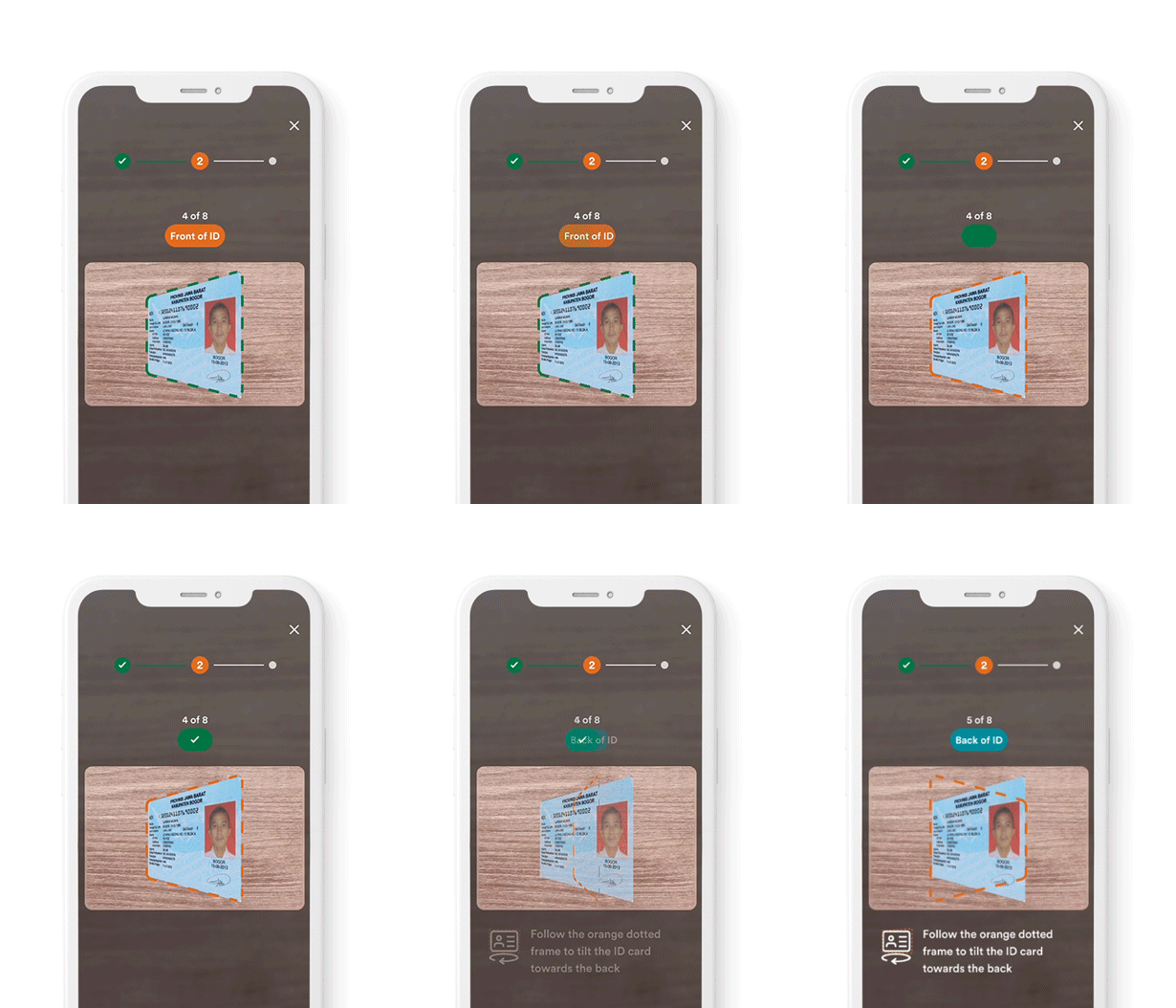
Tilted ID card: Asking customers to tilt their ID card to reveal the holographic security feature, ensuring the card is genuine.
NFC technology: Allowing agents to tap the ID card with their phone to verify its authenticity digitally.
Opportunities
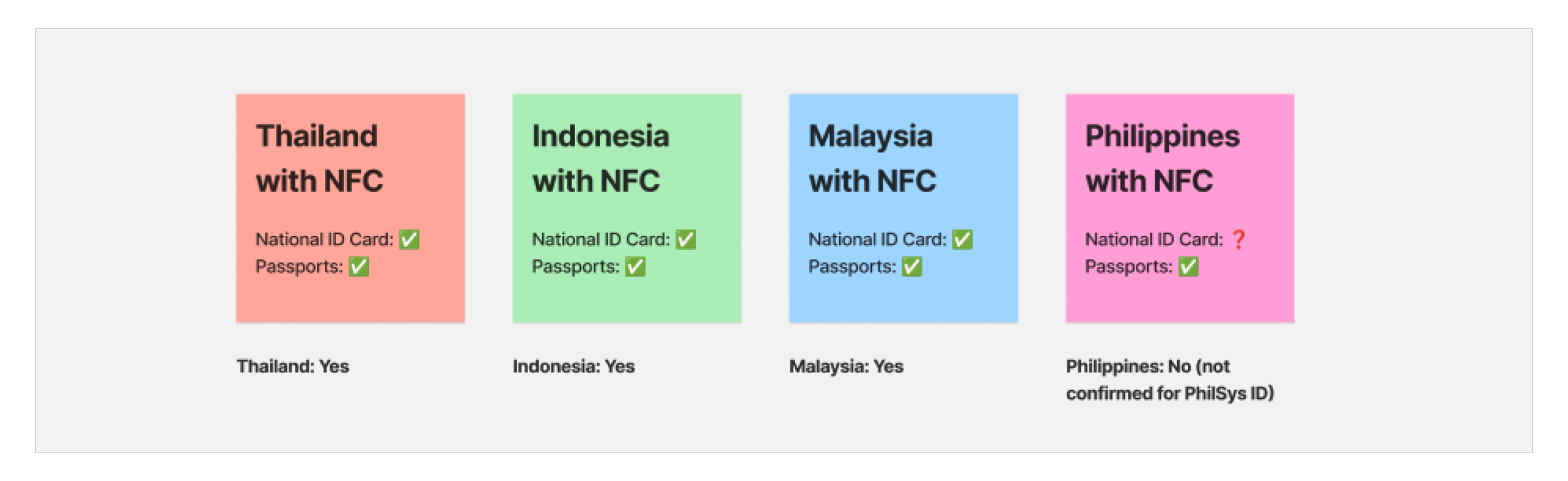
As the eKYC journey is designed for cross‑country adoption, we also researched ID cards from Cube‑supported markets (IDN, Malaysia, Philippines and Thailand) — to assess whether they support NFC verification.
Solution Alignment
Based on these insights, we collaborated with the development team to evaluate technical feasibility and determine the most practical direction. Considering budget and timeline constraints, the team agreed to move forward with a solution that combined tilted ID card verification with liveness checks.
Usability Testing
We conducted usability tests with 5 participants, including 2 real-life agents, to evaluate whether the tilt‑card concept was easy to understand and follow. The goal was to observe:
Comprehension: Did participants understand the instruction to tilt the ID card?
Execution: Were they able to correctly tilt the card to reveal the holographic security feature on the back?
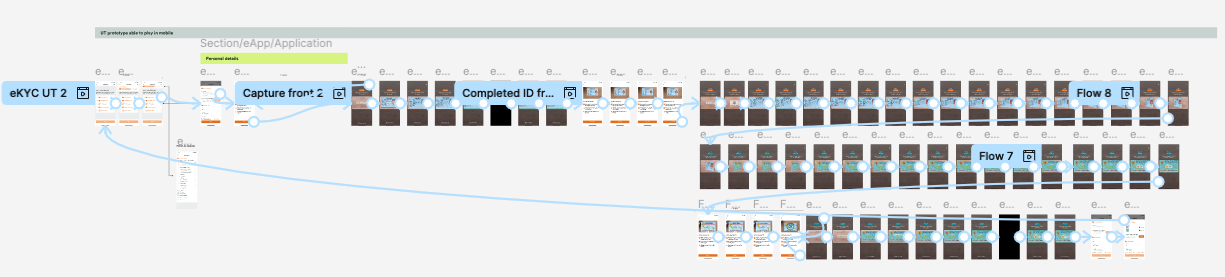
Hi-fi prototype
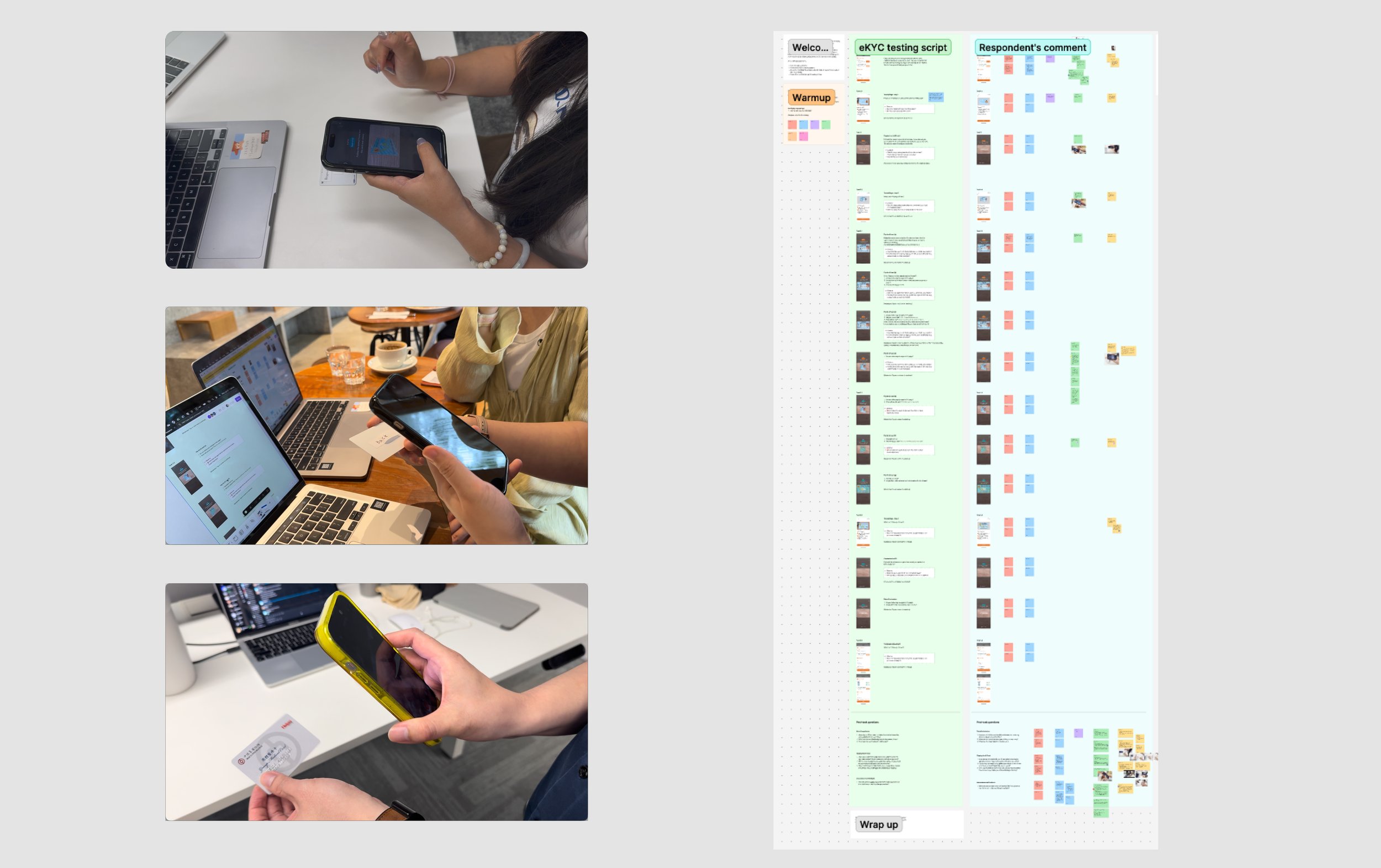
Conducting UT / Test script
From the usability test, we gathered the following key observations:
Verification timing: Participants preferred completing customer identity verification at the end of the sales journey rather than earlier
Tutorial frequency: Participants expected the tutorial page to appear only on the first use, not every time
Process concerns: Participants worried they would need to redo the entire process if the ID capture failed.
Therefore, we revised our design based on user feedback:
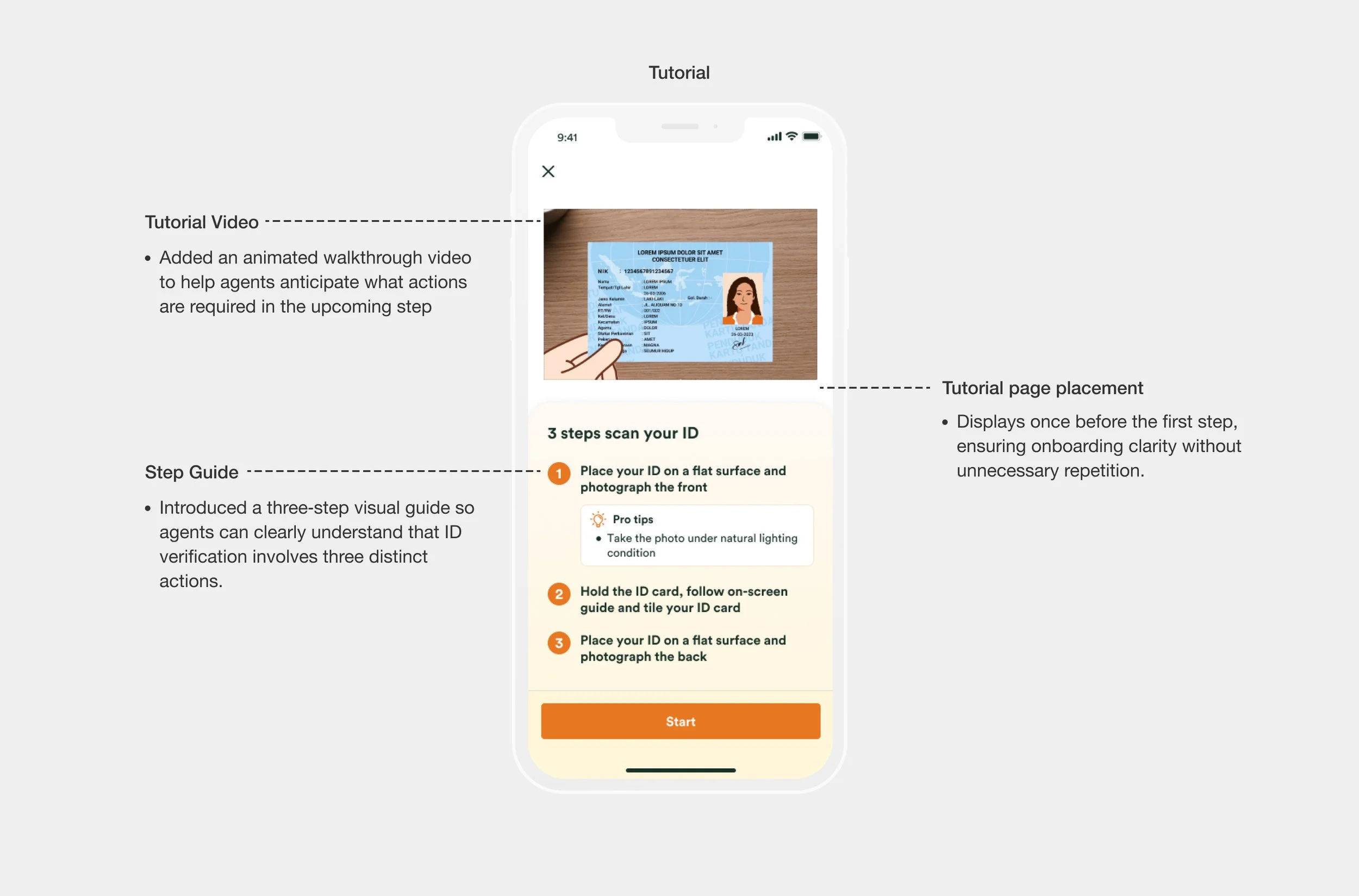
Revamped design - Tutorial page
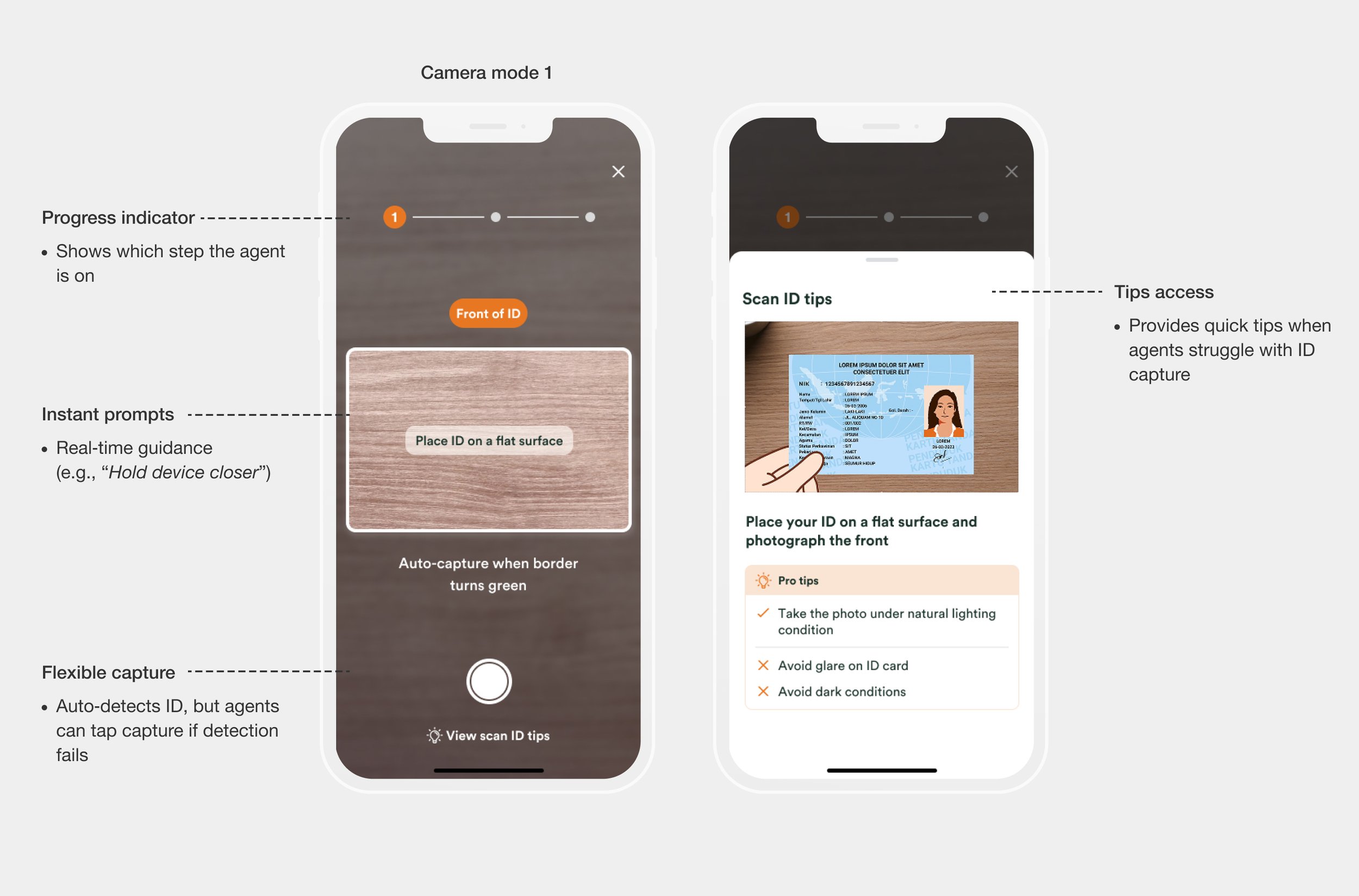
Revamped design - Camera mode
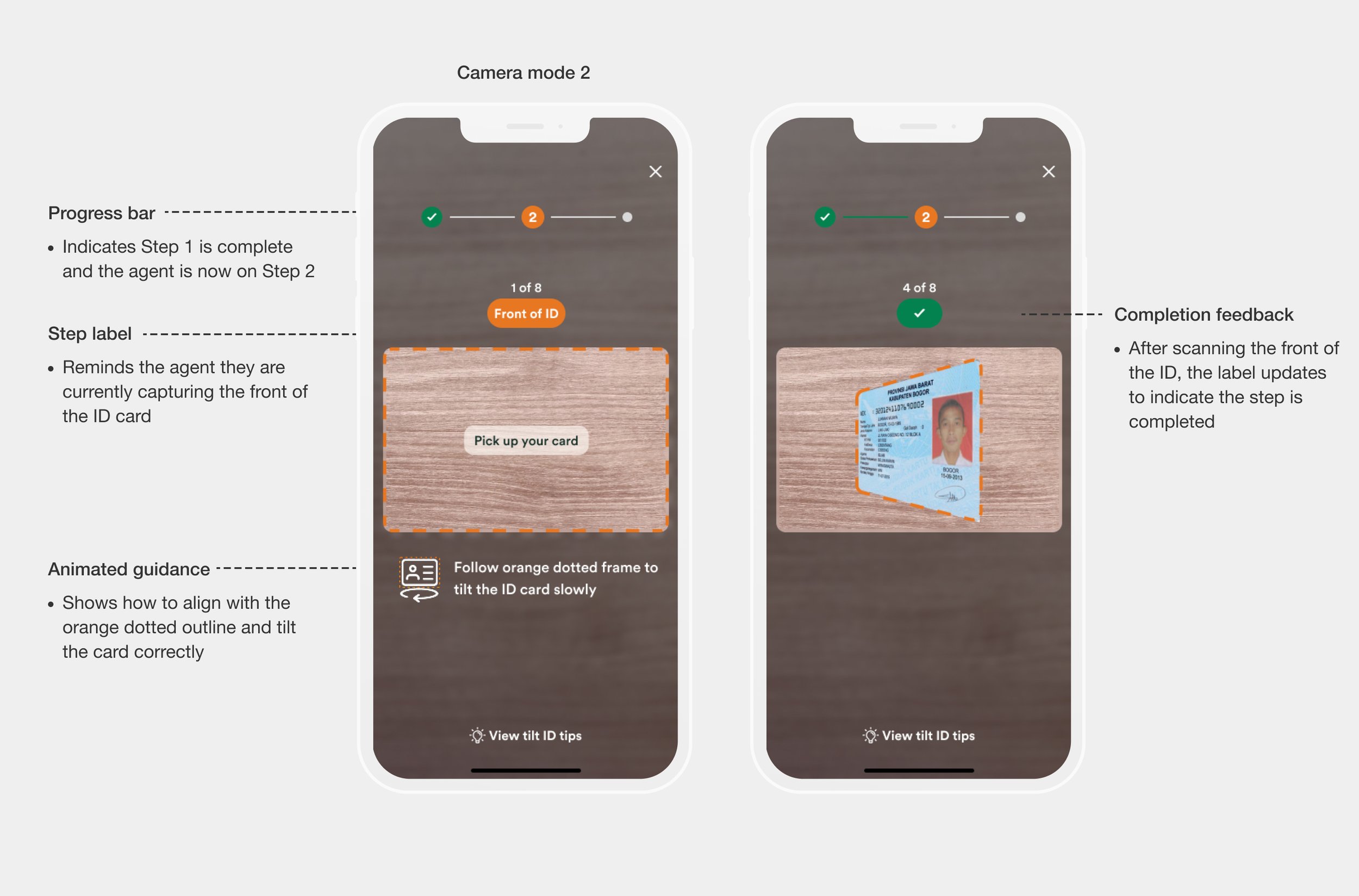
Revamp design - Camera mode
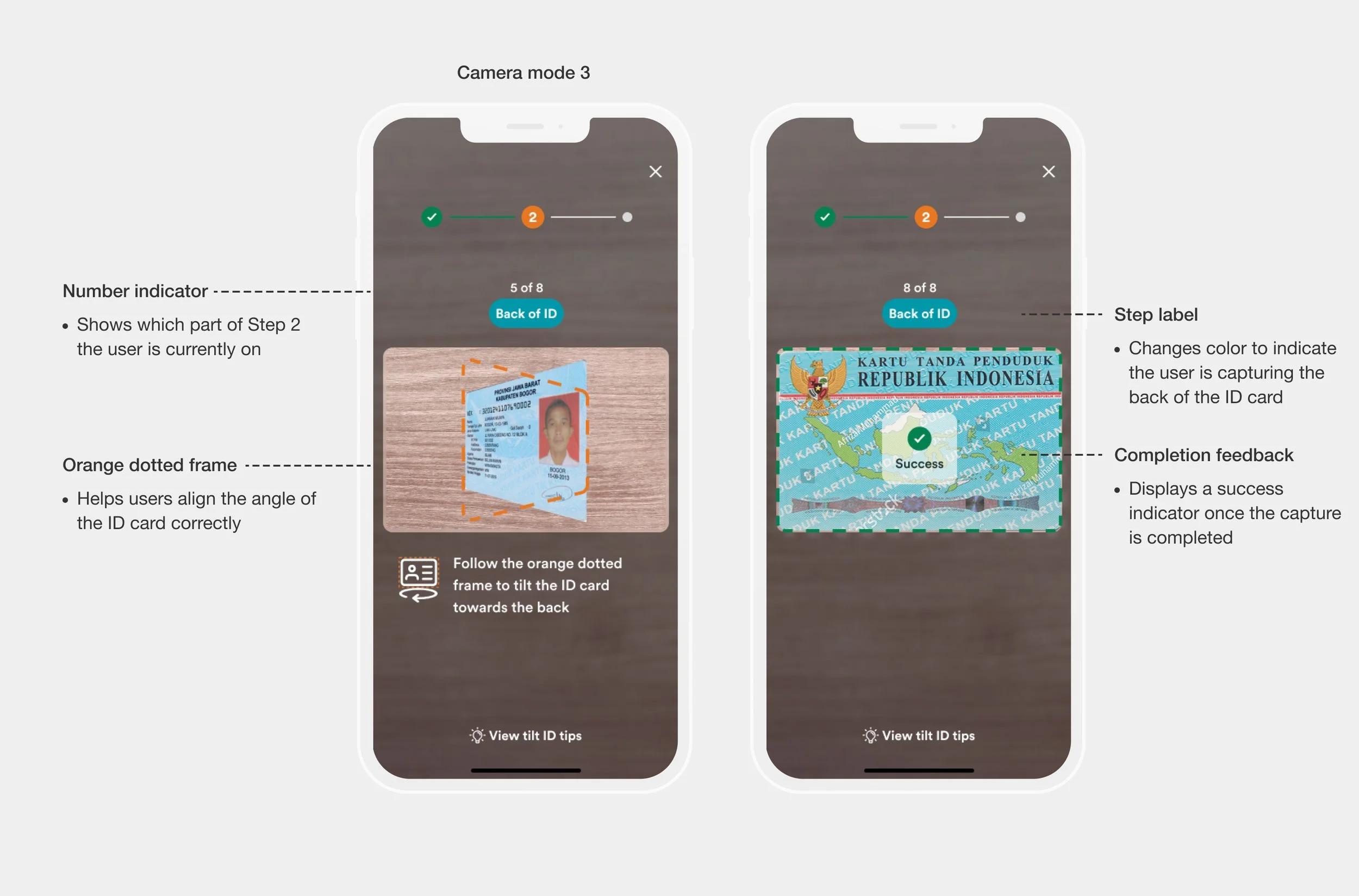
Revamp design - Camera mode
Micro‑interactions
Detection feedback
When the ID is detected, the frame turns green and the device vibrates
Step completion
Once an agent completes a step, a green tick appears, and the next step becomes active
Frame alignment
When the ID card fits within the frame, the border turns green and prompts the agent to tilt to the next angle
Front capture feedback
After capturing the front of the ID, the front label turns green and updates to the back ID label
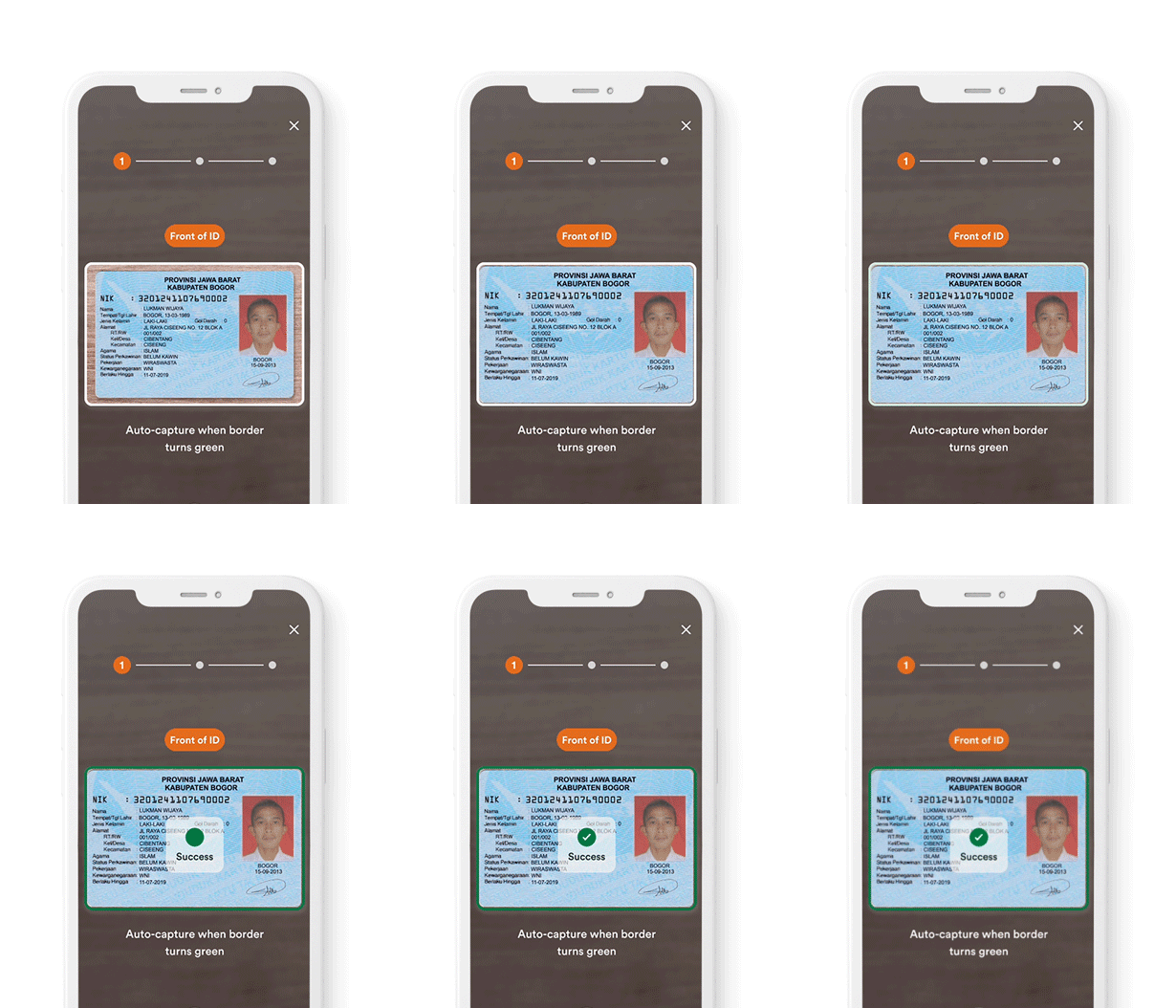
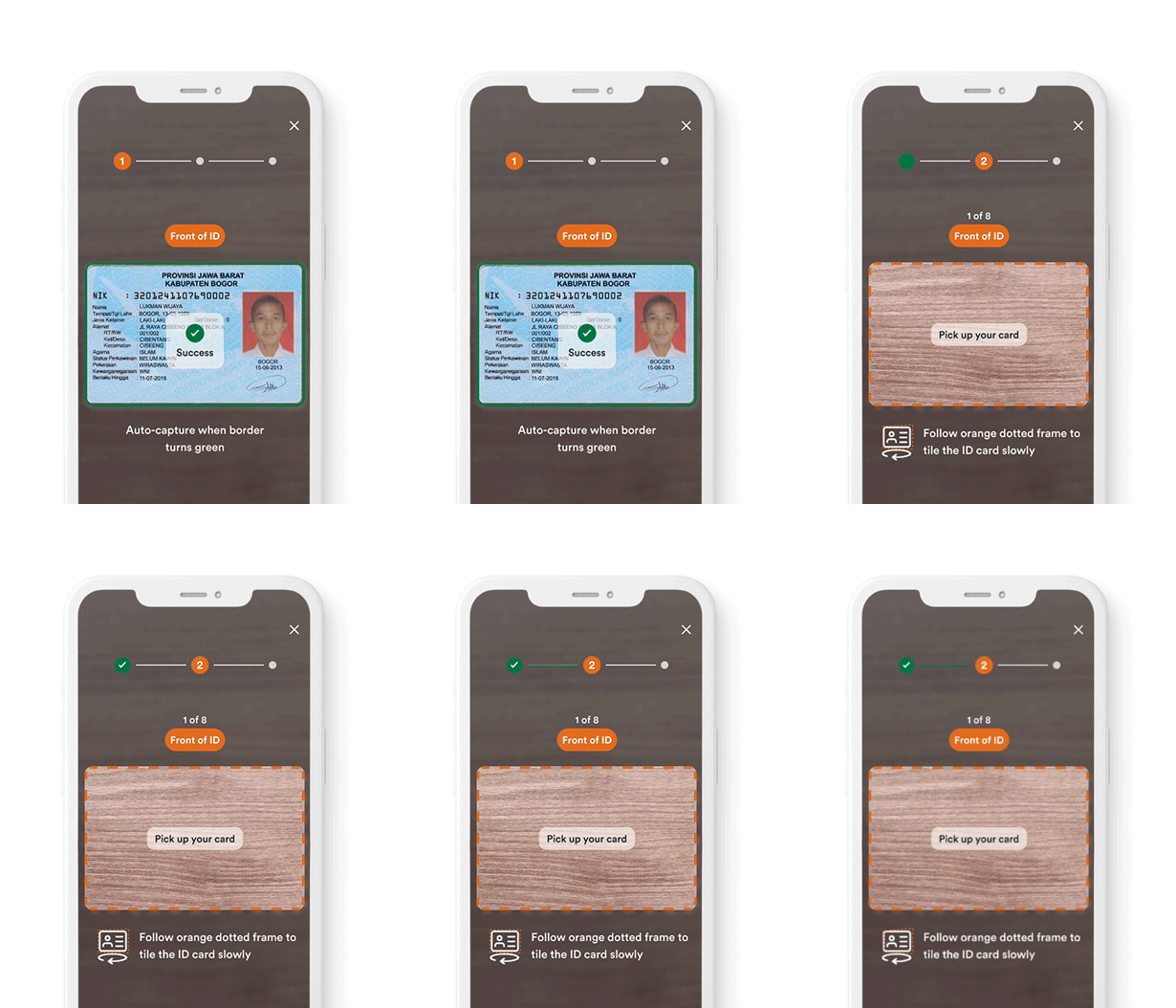
The redesigned eKYC verification flow delivered clearer guidance that reduced confusion and capture errors, while increasing completion rates in testing. Although not yet implemented due to shifting priorities, the solution was fully designed, validated, and is ready for deployment.